

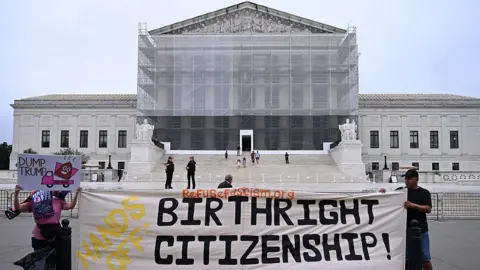
The nation's highest court has will hear a landmark case that questions a historic constitutional right: guaranteed citizenship for individuals born within US borders.
On day one in office this winter, the President enacted a directive aiming to terminate the policy, but the action was subsequently blocked by federal courts after lawsuits were brought forward.
The Supreme Court's final judgment will either affirm citizenship rights for the offspring of migrants who are in the US illegally or on non-immigrant visas, or it will nullify those rights altogether.
Next, the justices will calendar a session to hear oral arguments between the federal government and the suing parties, which include parents who are immigrants and their newborns.
The 14th Amendment
For more than 150 years, the Fourteenth Amendment has codified the principle that all individuals born in the country is a citizen, with specific conditions for children born to foreign diplomats and members of occupying armies.
"All persons born or naturalized in the United States, and subject to the jurisdiction thereof, are citizens of the United States."
The disputed presidential order sought to refuse citizenship to the children of people who are whether in the US illegally or are in the country on temporary visas.
The United States is among about 30 countries – primarily in the Americas – that grant immediate citizenship to all those born within their borders.


